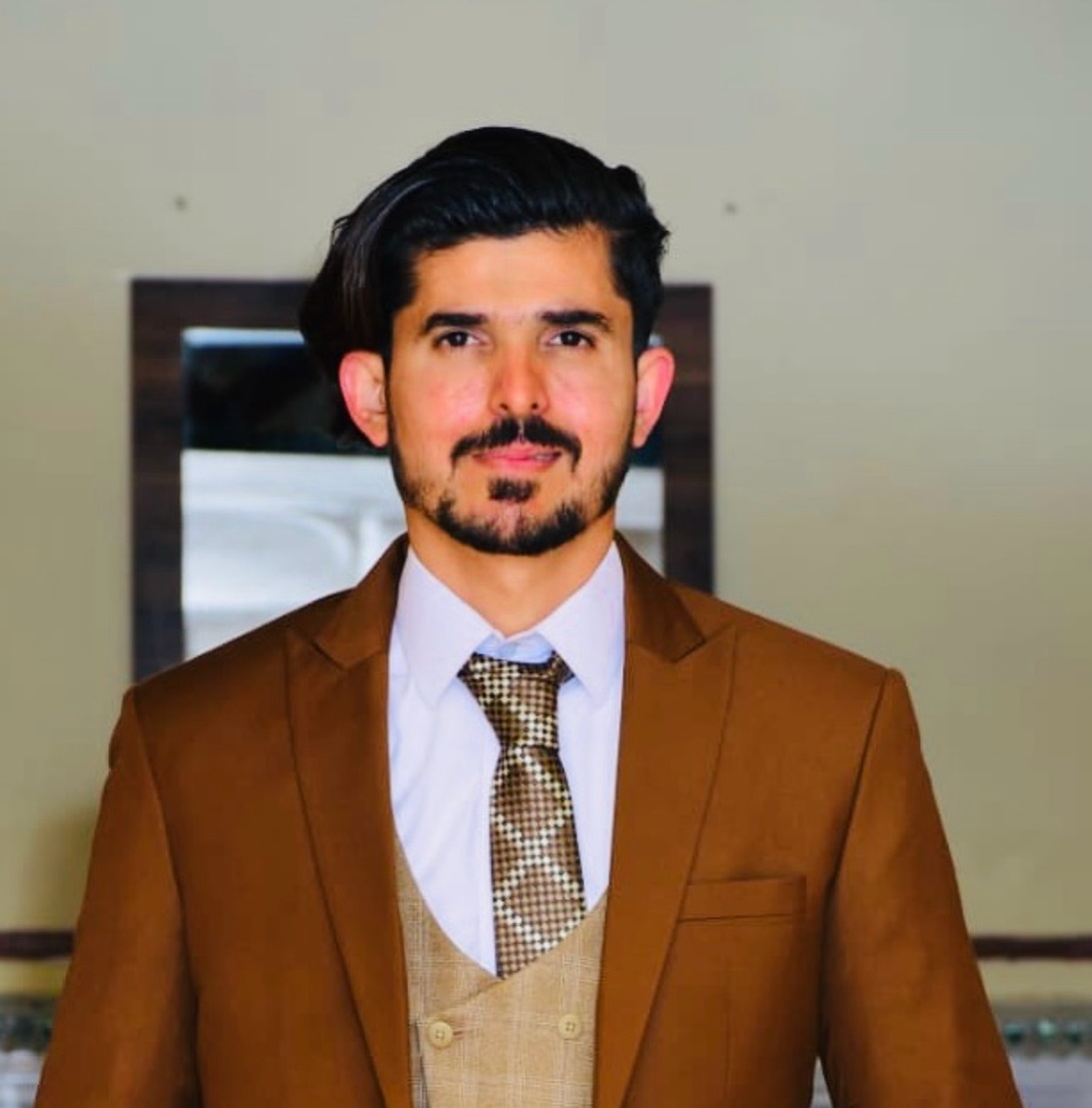

Uzair Malik
I'm Designer
About
I'm a coder and environmentalist passionate about building a sustainable future. My PhD in developing large language models for net-zero energy buildings will fuel my drive to create transformative solutions. I love to code and solve complex problems, envisioning a world where buildings are intelligently designed for minimal environmental impact.
Skills and Certifications
- Generative AI with Large Language Models (src)
- Knowledge Graphs for RAG (src)
- LangChain Chat with Your Data (src)
- Finetuning Large Language Models (src)
- How Diffusion Models Work (src)
- Neural Networks and Deep Learning (src)
- Mathematics for Machine Learning: Linear Algebra by Imperial College London (src)
- Meta Front-End Developer Professional Certificate (src)
- Connect and Protect: Networks and Network Security by Google (src)
- Play It Safe: Manage Security Risks by Google (src)
- Foundations of Cybersecurity by Google (src)
- An Intuitive Introduction to Probability by University of Zurich (src)
- Programming for Everybody (Getting Started with Python) by University of Michigan (src)
- Data Visualization with Python (src)
- Python Data Structures by University of Michigan (src)
- Data Analysis with Python (src)
- Databases and SQL for Data Science with Python (src)
- Python for Data Science, AI & Development (src)
- Data Science Methodology (src)
Resume
Summary
Uzair Malik
Innovative and deadline-driven software developer with 10+ years of experience designing and developing user-centered digital solutions from initial concept to final, polished deliverable.
- Birmingham City University, United Kingdom
- malikuzair.mehmood@mail.bcu.ac.uk
Education
PhD Researcher in AI, NLP, LLMs, NZEBs
2025 - 2028
Birmingham City University, United Kingdom
My research will develop large language model based solutions specifically for net zero energy buildings, enabling intelligent control and optimization of building designs. This work will contribute to the advancement of AI-driven solutions for sustainable building management.
Master of Science in Computer Science
2018 - 2020
COMSATS University Islamabad, Pakistan
I earned a Master's degree in Computer Science, gaining in-depth knowledge of Machine Learning, Natural Language Processing, and Artificial Intelligence.
Bachelor of Science in IT
2010 - 2014
University of Gujrat, Pakistan
My Bachelor's degree provided a comprehensive foundation in software development, covering web, desktop, and mobile applications, as well as database systems, networking, and cybersecurity.
Professional Experience
Manager of Research and Software Development
2018 - 2024
National Space Agency, Pakistan
- Collaborate and communicate with data analytics, and cross-functional teams on a task basis.
- Adapt theoretical concepts and standardized techniques to real-world problems
- Full Stack Web Development
- Work as ML engineer on several R&D projects
- Manage and Lead several R&D projects
Data Scientist
2020 - 2024 (Part time)
2024 - 2025 (Full time)
B&B System
- Built predictive models for customer segmentation and product recommendations.
- Analyzed user and sales data to identify trends and optimize pricing strategies.
- Full Stack Web Development
- Designed A/B tests to assess marketing and UX improvements.
- Deployed machine learning models and maintained scalable data pipelines.
Lecturer Computer Science
2016 - 2018
Government Graduate College Jhelum, Pakistan
- Taught following subjects
- Object-oriented programming
- Web Systems and Technologies
- Visual Programming
- Data Structures
- Supervising undergrad final year projects
- Designed, Developed and Managed several information management systems of college
Software Engineer
2014 - 2016
Acquity Software, Pakistan
- Design and development of client database
- Front and back end development of web based projects
- Communication with clients
- Languages used were PHP on server side and HTML, CSS, JavaScript/jQuery for client side
- DBMS used were MySQL and PostgreSQL
Projects
- BIM-GRASP: A Graph-RAG Approach for Semantic Parsing of IFC Building Models
- LLM-based Content Classification Approach for GitHub Repositories by the README Files
- Unsupervised Latent Dirichlet Allocation Assisted Github Readme File Content Classification
- Prediction and Diagnosis of Dengue Fever using Supervised Machine Learning
- A Systematic Literature Review of state of the art algorithms and datasets used for Human Activity Recognition
- Document Binarization using classic thresholding algorithms and Deep Neural Networks on DIBCO dataset
- Pakistan Remote Sensing Satellite Imagery Acquisition System
In this paper, we propose BIM-GRASP, a Graph-RAG-based approach for semantic parsing and natural language querying of IFC building models. The proposed approach integrates IFC data with knowledge graphs and Large Language Models (LLMs) to enable more effective retrieval and interpretation of building information. We evaluate the approach using different building models and query types, demonstrating its effectiveness in accurately retrieving and answering queries related to BIM data.
Available at: (Link)
In this paper we have fine tuned several pretrained LLMs to classify different sections of a GitHub README file and our results have outperformed state of the art results. In this paper we have experimented with full fine tuning and parameter efficient fine tuning techniques like Low Ranked Adaptation (LoRA) algorithm.
Available at: (Link)
This project centered around a thesis on machine learning and natural language processing. Its objective was to enhance the quality of GitHub readme files through the utilization of machine learning algorithms. The initial step involved gathering a dataset of GitHub readme files by means of web scraping from the GitHub platform. These files were subsequently annotated manually, adhering to the official recommendations provided by GitHub. Moreover, to automatically label various sections within the readme files, a series of preprocessing steps were implemented. To extract meaningful topics from the readme files and facilitate the automatic labeling process, the latent Dirichlet allocation algorithm, a topic modeling technique, was applied in various configurations. .
Available at: (Link)
I oversaw a research project that aimed to develop a diagnostic system for identifying dengue fever in patients based on a range of symptoms. The project involved obtaining a dataset from District Headquarter Hospital Jhelum, which consisted of symptom records from individuals diagnosed with dengue fever. Following a series of preprocessing steps to prepare the data, we employed machine learning algorithms to perform the task of diagnosing and detecting dengue fever in patients.
Available at: (Link)
Performed SLR of state of the art algorithms and datasets used for HAR
Available at: (Link)
Conducted a comparative analysis of document binarization approaches with an emphasis on Otsu’s and Niblack’s methods, which belong to the classical approaches of Optical Character Recognition (OCR) and image analysis. Moreover, investigated use of Deep Neural Networks (DNNs) in the given DIBCO database. This study was meant to assess the performance of conventional techniques in thresholding against the state-of-the-art-deep learning in converting gray-scale or color document images to binary forms.
This is a GIS web based system that allows users to browse and order satellite imagery online.
Available at: (Link)